

The Doctor's Book of Survival Home Remedies Claims Evaluated: 2026 Consumer Research Report Examining The Great Healthcare Reset by Dr. Herzog
A 2026 consumer research report examining preparedness health resources, pharmaceutical supply vulnerabilities, herbal remedy research context, and publicly available information about The Doctor's Book of Survival Home Remedies
Boise, Idaho, March 12, 2026 (GLOBE NEWSWIRE) -- This article contains affiliate links. If a purchase is made through these links, a commission may be earned at no additional cost to the buyer. This article is an informational overview and does not constitute medical, health, or dietary advice. All product details described below are stated as presented by the company and should be verified directly on the official website before any purchasing decision. Nothing in this article is intended to discourage readers from seeking professional medical care or from following the guidance of a licensed healthcare provider. Consult a qualified healthcare professional before making any changes to your health regimen.
Discussions about pharmaceutical supply resilience have increased in recent years as healthcare systems, policymakers, and preparedness organizations examine how households manage medication access during periods of supply disruption. Drug shortages have been a documented and recurring feature of the American healthcare system for well over a decade — tracked actively by the FDA, studied by hospital systems building supply redundancy, and covered extensively by healthcare policy researchers examining the structural vulnerabilities created by overseas active pharmaceutical ingredient manufacturing concentration.
Within this conversation, preparedness publications such as The Doctor's Book of Survival Home Remedies have attracted attention from readers researching herbal remedy literature and alternative health resources for contingency planning scenarios. Interest in household preparedness guides covering medical self-sufficiency has grown alongside broader awareness of how quickly supply chains can be stressed — a pattern observed during the COVID-19 pandemic and reinforced by periods of supply disruption that followed.
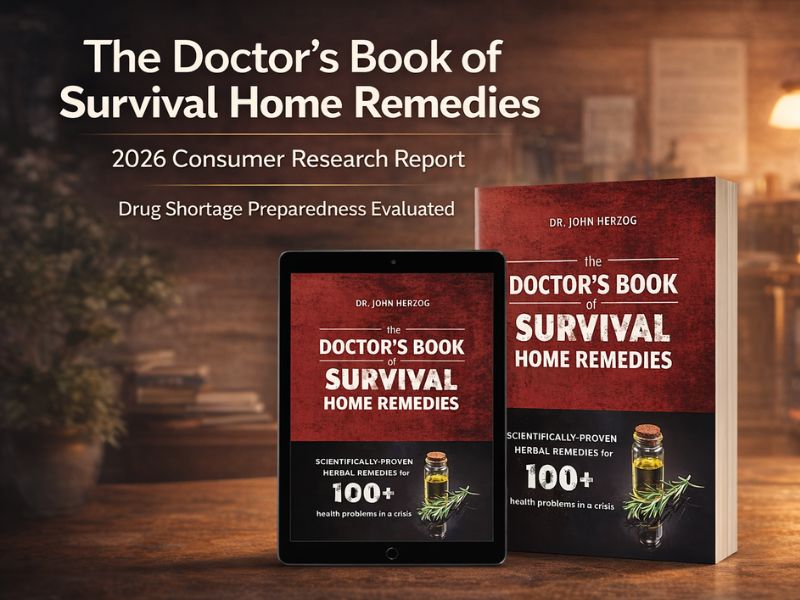
Survivopedia publishes preparedness and self-reliance content covering emergency planning topics and has been active in the household preparedness space for over a decade. The Doctor's Book of Survival Home Remedies is presented by the publisher as its most comprehensive health-focused publication, developed with input attributed to Dr. John Herzog and framed around herbal and home-based remedies for preparedness scenarios.
This consumer research report examines what the book contains, what credentials are cited, what ingredient-level research supports the remedies described, and where readers should set realistic expectations. Readers researching the guide can View the current The Doctor's Book of Survival Home Remedies offer (official Survivopedia page).
Individual results vary. Home remedies and herbal preparations described in preparedness books are not substitutes for professional medical care. Readers with chronic health conditions, those taking prescription medications, and anyone facing a medical emergency should consult a licensed healthcare provider before applying any remedy described in any preparedness guide.
What Is The Doctor's Book of Survival Home Remedies
According to the publisher, The Doctor's Book of Survival Home Remedies is a preparedness reference guide that compiles herbal and home-based remedies intended for situations where conventional medical resources may be limited. Publicly available information indicates the guide runs approximately 400 pages and is organized around the most common health situations a person might face when access to prescription medications or urgent care is disrupted — covering infections, chronic condition management, and emergency first-response scenarios.
The book is available in both physical and digital formats. According to the publisher's website, the physical edition ships via USPS, the digital edition is delivered immediately to the buyer's inbox upon purchase, and both formats are distributed through ClickBank as the authorized payment processor. The publishing entity is identified as Direct Response SRL, operating under docshomeremedies.com.
According to the publisher's materials, Dr. John Herzog is a board-certified osteopathic surgeon who contributed the remedies framework after years of personal research into herbal alternatives alongside his clinical practice. The publisher notes that osteopathic surgeons train across a broad range of medical situations — infections, injuries, chronic disease, emergency response — rather than narrow specialties, and that this breadth informs the book's scope. Readers who want to independently verify Dr. Herzog's credentials can search the American Osteopathic Association's physician directory.
The publisher states that each remedy in the book meets two criteria: it must be supported by published scientific research, and it must be practically accessible in a real supply-disruption scenario using ingredients available in North America — meaning items found in American backyards, standard grocery stores, or mainstream retailers. That second criterion is a meaningful practical distinction from many herbal remedy books, which frequently reference plants that are unavailable or difficult to source in the United States.
Readers researching the guide can View the current The Doctor's Book of Survival Home Remedies offer (official Survivopedia page).
Drug Shortage Context: What Publicly Available Data Shows
To understand the preparedness context this Survival Home Remedies book addresses, it helps to look at what verified public sources actually show about pharmaceutical supply vulnerabilities — because this is the documented, policy-level concern behind the book's premise.
The FDA maintains an active Drug Shortages database tracking shortages across categories including antibiotics, oncology medications, blood pressure medications, and controlled substances. According to published FDA data and reporting from healthcare policy organizations, drug shortage numbers have remained elevated since the early 2010s, with documented spikes during periods of supply chain stress. The American Society of Health-System Pharmacists has maintained its own shortage tracker that has consistently shown dozens of active shortages across critical medication categories at any given time.
The concentration of active pharmaceutical ingredient (API) manufacturing in overseas facilities — particularly in India and China — has been documented extensively by the FDA, the Department of Health and Human Services, and the Government Accountability Office as a structural vulnerability in the U.S. drug supply. Multiple GAO reports have examined this issue directly. The COVID-19 pandemic made this vulnerability visible in real time, particularly for generic medications and certain specialty drugs.
Reshoring pharmaceutical manufacturing has been a stated policy priority under multiple administrations, including a current executive focus on reducing dependence on overseas API sourcing. This reflects a documented structural concern that healthcare policy professionals across the political spectrum have engaged with seriously.
The practical question the Survival Home Remedies book attempts to address — what do households do when a needed medication is temporarily or chronically unavailable? — is therefore a reasonable preparedness question. Emergency management professionals, wilderness medicine practitioners, integrative healthcare providers, and military field medicine specialists have all engaged with versions of this question for years.
Ingredient-Level Research: What the Published Literature Supports
The publisher claims every remedy in The Doctor's Book of Survival Home Remedies is backed by published scientific research. Below is an examination of several specific remedies highlighted in the publisher's marketing materials, compared against what peer-reviewed literature actually shows.
The critical distinction maintained throughout: this is ingredient-level research — findings on individual compounds studied under controlled conditions. It is not clinical validation of The Doctor's Book of Survival Home Remedies as a finished product, and the Survivopedia preparedness guide has not itself been evaluated through independent clinical trials.
Bay Laurel and Pain Management
The publisher describes bay laurel (Laurus nobilis) as a pain management remedy, highlighting its active compound eucalyptol. Published research does exist on this topic. A study cited in the publisher's materials examined the analgesic and anti-inflammatory activity of Laurus nobilis leaf essential oil and found pain-relief activity in controlled testing. The publisher's marketing language draws a comparison to morphine's pain-relief properties — that comparison was made in a specific controlled research context examining isolated compounds, not in human clinical trials comparing bay laurel preparations directly to pharmaceutical opioids.
Eucalyptol is a real and studied compound. Topical applications of plant extracts containing eucalyptol have appeared in published literature examining anti-inflammatory and analgesic effects. This is ingredient-level evidence — not a validated clinical claim that bay laurel preparations reliably replace pharmaceutical pain management across all scenarios.
Nigella Sativa and Bacterial Infections
Nigella sativa (black cumin) and its active compound thymoquinone carry a substantial body of peer-reviewed research behind them. A study cited in the publisher's materials examined the antimicrobial activity of Nigella sativa seed oil against multi-drug resistant bacteria from clinical isolates and reported inhibitory effects across a significant number of bacterial strains tested. Additional peer-reviewed literature published in the National Library of Medicine has reviewed Nigella sativa's broader therapeutic potential across multiple health applications.
The publisher's claim that nigella sativa has shown activity against antibiotic-resistant bacterial strains reflects findings from specific controlled laboratory studies — not clinical trials validating nigella sativa preparations as antibiotic replacements in human patients. Readers should understand this distinction clearly before relying on any herbal preparation for serious bacterial infections.
Flaxseed and Blood Pressure Support
The flaxseed recommendation for blood pressure management has some of the strongest ingredient-level evidence of any claim highlighted in the Survival Home Remedies book's marketing materials. A review published in the National Library of Medicine examined flaxseed's role in hypertension management and found that flaxseed supplementation was associated with reductions in both systolic and diastolic blood pressure in populations with elevated baseline readings. The Dietary Approaches to Stop Hypertension research framework has also noted flaxseed among dietary factors associated with blood pressure management outcomes.
This is among the better-supported ingredient-level claims in the publisher's promotional material. That said, readers with diagnosed hypertension who are taking prescription antihypertensives should not modify or discontinue any medication based on a dietary or herbal approach without explicit guidance from their prescribing physician.
Cinnamon and Blood Sugar Context
The herbal survival remedy reference includes cinnamon (Cinnamomum cassia) for blood sugar support in people with type 2 diabetes. A meta-analysis published in the National Library of Medicine found that cinnamon use was associated with statistically significant reductions in fasting blood glucose across type 2 diabetes studies, though the authors noted variability across individual studies and recommended further research. This is ingredient-level evidence — not a validated clinical protocol for diabetes management without pharmaceutical intervention. Readers managing type 2 diabetes should treat any herbal or dietary approach as a complement to, not a replacement for, their physician-directed care plan.
How the Survivopedia Preparedness Guide Is Organized
One of the publisher's central practical claims is that The Doctor's Book of Survival Home Remedies is designed for quick reference use under pressure — indexed by health condition, with multiple remedy options listed per condition in case a primary ingredient is unavailable, and cross-referenced so a reader can locate relevant content without reading the book from cover to cover first.
For a preparedness health guide, this is a meaningful structural consideration. A 400-page book that requires linear reading to locate a relevant remedy is far less practical in a time-sensitive situation than one organized with a condition-based index and built-in alternatives. The publisher describes the index as designed so readers can quickly identify their health concern and find the relevant section without prior familiarity with the book's full contents.
The publisher also states the book is organized into three broad areas: managing common infections and acute illnesses, supporting chronic health conditions when prescription access is disrupted, and responding to emergency situations that would normally require professional urgent care. Each section is described as following the two-criteria standard noted earlier — published research support and North American ingredient availability.
Independent verification of the book's complete contents is not possible from publicly available sources. This report is based on the publisher's own product descriptions, publicly available marketing materials, and the ingredient-level research available for the specific remedies highlighted in those materials.
Author and Publisher Credentials: What Publicly Available Information Shows
The book is attributed to David Miller, the lead voice of Survivopedia.com, and Dr. John Herzog. According to the publisher's materials, Dr. Herzog is a board-certified osteopathic surgeon who developed the remedies framework through years of personal research into herbal alternatives alongside his clinical practice.
Osteopathic surgeons hold the D.O. degree and, when board-certified as surgeons, have completed the accredited training pathways required for surgical certification. Board-certified osteopathic surgeon is a recognized medical qualification. The publisher's description of Dr. Herzog's credentials has not been independently verified by this publication. Readers who want to confirm his credentials directly can search the American Osteopathic Association's physician directory or the relevant state medical board registry — both are publicly accessible.
Survivopedia's terms of service disclose that "Alec Deacon," used in other Survivopedia-affiliated publications, is a pseudonym. The Doctor's Book of Survival Home Remedies is attributed to named authors — David Miller and Dr. John Herzog — not to the Alec Deacon pseudonym. This is worth noting for readers who come across that name while researching Survivopedia's broader content library.
Realistic Expectations: What This Preparedness Health Guide Does Not Cover
Setting accurate expectations is central to how any preparedness reference should be evaluated — and being upfront about limitations is genuinely more useful to a reader than overstatement.
Prescription medication management: The Survival Home Remedies book describes herbal alternatives for symptom management and general health support in scenarios where pharmaceutical access is disrupted. It does not and cannot replicate prescription medication for conditions requiring specific pharmaceutical intervention — including insulin-dependent diabetes, seizure disorders, serious psychiatric conditions, anticoagulation therapy, and others. Readers who depend on specific prescriptions should have independent emergency supply strategies developed in partnership with their physician.
Emergency medical care: The book includes a section on emergency situations, but it is not a substitute for trained emergency medical response. Situations requiring surgery, advanced trauma care, or critical care cannot be managed with herbal preparations. The emergency section is best understood as a resource for scenarios where professional care is genuinely inaccessible — not as an alternative to calling emergency services when they are available.
Pediatric applications: The book does not appear to be specifically designed or validated for pediatric use. Parents considering any home remedy for children should consult a pediatrician first, as dosing, safety profiles, and contraindications can differ substantially between adults and children.
Drug interactions: Several herbs with published research — including ginger, garlic, and certain plant-based compounds — have known or potential interactions with pharmaceutical medications, particularly blood thinners and antihypertensives. Readers who take prescription medications should review any herbal remedy with their pharmacist or physician before use.
Who This Preparedness Reference May Be Relevant For
Households building preparedness libraries often evaluate multiple sources when researching contingency health planning. Based on the publisher's positioning and the ingredient-level research landscape, The Doctor's Book of Survival Home Remedies may be of practical interest to several reader profiles.
Adults who maintain household preparedness supplies and want a reference developed with attributed physician input for managing common health situations — when access to conventional care is limited — may find the book's condition-indexed structure useful as part of a broader preparedness library. The emphasis on North American ingredient availability addresses a practical gap that is common in herbal remedy literature.
Readers in rural or remote areas — where access to pharmacies or urgent care facilities is already limited and supply chain disruptions represent an amplified risk — may find the multiple-options-per-condition format of this herbal survival remedy reference useful when evaluating preparedness references.
Individuals with a general interest in integrative or complementary health who want a reference grounded in published research rather than anecdotal tradition may find value in a physician-attributed preparedness health guide that cites its sources and was built to a stated research standard.
The book is likely less suited for readers expecting a clinical-grade pharmaceutical reference, those seeking validated treatment protocols for serious chronic disease management, or anyone in an active medical crisis who should be contacting emergency services or a licensed physician immediately.
Pricing and Purchase Structure
According to the publisher's website at the time of publication, the digital edition of The Doctor's Book of Survival Home Remedies is listed at $37 and delivered immediately to the buyer's inbox. A physical plus digital bundle adds $8.99 for shipping and handling, with the printed copy shipped separately and the digital version delivered immediately according to the publisher. Physical delivery via USPS takes up to ten business days according to the publisher's shipping policy.
Three free bonus reports are included with purchase according to publicly available product information: a guide covering medications with documented serious side effects alongside herbal alternatives, a home emergency response guide, and a reference covering household items with documented first-aid applications. These are described as digital reports delivered alongside the main purchase.
According to the published terms, buyers can return the physical copy and request a full refund within 60 days of ordering. Digital-only buyers can submit a refund request via email to support@survivopedia.com, and the publisher states digital buyers may keep the download even if a refund is issued. Refund requests can also be initiated through ClickBank's self-service portal at clkbank.com.
Readers can verify the publisher's listed refund policy, delivery format, and current terms directly on the official product page. All pricing information is based on the publisher's website at the time of publication (March 2026) and is subject to change. Readers researching the Survivopedia preparedness guide can View the current The Doctor's Book of Survival Home Remedies offer (official Survivopedia page).
Consumer Questions About The Doctor's Book of Survival Home Remedies
Is this a supplement or a book?
This is a reference book — available in physical and digital formats — not a supplement or medical device. It describes herbal and home-based remedies using ingredients the reader sources independently. Nothing to take or apply comes packaged with the book itself.
Who is Dr. John Herzog?
According to the publisher's materials, Dr. John Herzog is a board-certified osteopathic surgeon who developed the remedies framework through years of personal research into herbal alternatives for chronic health management. Readers who want to verify his credentials independently can search the American Osteopathic Association's physician directory, which is publicly accessible.
Are the remedies FDA-approved?
No. The remedies described are herbal and home-based approaches and are not FDA-approved treatments for any condition. The FDA does not evaluate or approve herbal remedy books or the individual preparations described within them. Some of the individual ingredients have been studied in peer-reviewed research; none represent FDA-approved pharmaceutical treatments.
Can this book replace prescription medications?
No. This is a preparedness reference for scenarios where access to conventional medical care is disrupted. It is not a guide for discontinuing prescribed medications. Readers whose conditions are managed by prescription drugs should maintain their medication supply and physician relationship as their primary healthcare strategy. This Survivopedia preparedness guide is a supplementary resource, not a replacement for pharmaceutical care.
Is there published research behind the remedies?
The publisher states that every remedy meets a standard of being supported by published scientific research, and the sales page cites specific published studies. As covered in the ingredient section above, several of the highlighted remedies do have peer-reviewed literature behind the specific compounds involved — particularly nigella sativa, flaxseed, cinnamon, and bay laurel. That research is ingredient-level, conducted under controlled study conditions, and does not constitute clinical validation of the book's specific preparation instructions as finished protocols.
Why are preparedness guides gaining attention in 2026?
Publicly available information points to several contributing factors: documented pharmaceutical supply chain vulnerabilities identified by the FDA and GAO over the past decade, renewed policy focus on reshoring active pharmaceutical ingredient manufacturing, and broader public awareness of how quickly supply chains can be disrupted during periods of economic or geopolitical stress. These are documented, policy-level concerns that have increased consumer interest in household preparedness resources across multiple categories — medical references included. Interest in herbal survival remedy references and preparedness health guides has grown alongside general preparedness category awareness.
What are the three bonus reports?
According to the publisher, buyers receive three digital bonus reports with any purchase: one covering medications with documented serious side effects alongside herbal alternatives, one covering home emergency response protocols, and one covering household items with documented first-aid applications. These are digital-only and delivered with the main purchase confirmation.
How do I request a refund?
According to the published refund policy, buyers have 60 days from purchase to request a refund. Physical copy buyers should contact support@survivopedia.com for return instructions. Digital buyers can email the same address. The publisher states digital buyers may keep the download even after a refund is processed. Refunds can also be initiated through ClickBank's self-service portal at clkbank.com.
Is Survivopedia.com a credible source?
Survivopedia publishes preparedness and self-reliance content covering emergency planning topics and has been active in the household preparedness space for over a decade. Its terms of service disclose that some content is published under pseudonyms for privacy. The Doctor's Book of Survival Home Remedies is attributed to named authors — David Miller and Dr. John Herzog — not to a pseudonym. As with any preparedness or health reference, readers are encouraged to evaluate specific claims against published sources and to consult qualified healthcare professionals regarding any health application.
Where is the book shipped from and how long does delivery take?
According to the publisher, physical orders are processed within 2 to 3 business days and delivered via USPS, with standard delivery taking up to 10 business days within the United States. International shipping is not currently available. The digital edition is delivered immediately upon purchase.
Additional Consumer Research
Consumers researching preparedness health references may find it useful to consult multiple sources. The FDA's Drug Shortages database at FDA.gov provides current and historical data on pharmaceutical supply disruptions. The American Herbal Products Association and the American Botanical Council both publish research-based resources on herbal safety and efficacy. PubMed, the National Library of Medicine's research database, allows direct verification of published studies on individual herbal compounds referenced in preparedness guides like The Doctor's Book of Survival Home Remedies.
Readers building a comprehensive household preparedness health library may also find wilderness medicine references, Red Cross first aid publications, and resources from the American College of Emergency Physicians useful as complementary coverage of the emergency scenarios this Survivopedia preparedness guide addresses.
Summary of Key Considerations
Publicly available information indicates that The Doctor's Book of Survival Home Remedies is positioned as a preparedness reference rather than a medical treatment guide. The book addresses a legitimate, well-documented concern — what households can do to support health management when conventional pharmaceutical access is disrupted — and grounds its remedies framework in a stated standard of published ingredient-level research and North American ingredient availability.
According to the publisher, the Survival Home Remedies book is built around physician-attributed input, a condition-indexed organizational structure, a focus on practically accessible ingredients, and a stated commitment to research-backed content. Readers can verify the publisher's listed refund policy, delivery format, and current terms directly on the official product page.
Readers should approach The Doctor's Book of Survival Home Remedies as what it is: a preparedness reference, not a clinical treatment protocol. Ingredient-level research on compounds like thymoquinone, eucalyptol, and alpha-linolenic acid supports the general direction of several remedies highlighted in the publisher's materials — but these are not FDA-approved treatments, and the finished herbal survival remedy reference has not been validated through independent clinical trials. Readers with chronic health conditions or active prescriptions should consult their physician before applying any herbal remedy approach.
Readers researching the guide can verify current pricing, delivery format, bonus materials, and published purchase terms directly through the official product page.
Contact Information
Publisher: Survivopedia
Customer Support Email: support@survivopedia.com
Payment Processor: Click Sales Inc. (ClickBank), 1444 S. Entertainment Ave., Suite 410, Boise, ID 83709, USA
ClickBank Self-Service Portal: https://www.clkbank.com/#!/
ClickBank Phone Support:
(US): +1 800-390-6035
(INT): +1 208-345-4245
Disclaimers
Content and Consumer Information Disclaimer: This article is an independent informational overview and does not constitute medical, health, dietary, financial, or legal advice. All product details, author credentials, pricing, and policy terms described in this article are stated as presented by the company on its publicly available website and product materials. This content has not been independently audited or verified unless specifically noted. Readers are encouraged to verify all claims directly with the publisher and to consult a qualified healthcare professional before applying any remedy described in the book.
Health and Preparedness Notice: Home remedies and herbal preparations described in preparedness books are not intended to diagnose, treat, cure, or prevent any disease. They are not substitutes for professional medical care, prescription medications, or emergency services. Readers with chronic health conditions, those taking prescription medications, pregnant or nursing individuals, and anyone facing a medical emergency should consult a licensed healthcare provider. Do not discontinue or modify any prescription medication without explicit guidance from your prescribing physician.
Results and Product Variability: Individual experiences with any home remedy or herbal preparation vary based on numerous factors including health status, ingredient quality, preparation method, consistency of use, and individual physiology. The publisher's descriptions of outcomes represent the company's own characterization of its content and should not be interpreted as guarantees of specific results.
Ingredient Research Disclaimer: References to published scientific studies in this article pertain to individual compounds and ingredients examined under controlled research conditions. These findings do not constitute clinical validation of The Doctor's Book of Survival Home Remedies as a finished product or of any specific preparation instructions within it. Always verify herbal remedy applications with a qualified healthcare professional, particularly if you take prescription medications or have existing health conditions.
FTC Affiliate Disclosure and Publisher Responsibility: This article contains affiliate links. If a product is purchased through these links, a commission may be earned at no additional cost to the buyer. Click Sales Inc. (ClickBank) serves as the authorized payment processor for this product. ClickBank's role as retailer does not constitute an endorsement, approval, or review of this product or any claim, statement, or opinion used in its promotion. The publisher of this article is not responsible for typographical errors, manufacturer changes to the product after publication, or individual consumer outcomes.
Pricing Disclaimer: All pricing information, bonus offers, shipping terms, and refund policies referenced in this article are based on information published on the official product website at the time of writing (March 2026) and are subject to change without notice. Consumers should verify current terms through the official website or the authorized payment processor before completing any purchase.

Email: support@survivopedia.com

Legal Disclaimer:
EIN Presswire provides this news content "as is" without warranty of any kind. We do not accept any responsibility or liability for the accuracy, content, images, videos, licenses, completeness, legality, or reliability of the information contained in this article. If you have any complaints or copyright issues related to this article, kindly contact the author above.
